

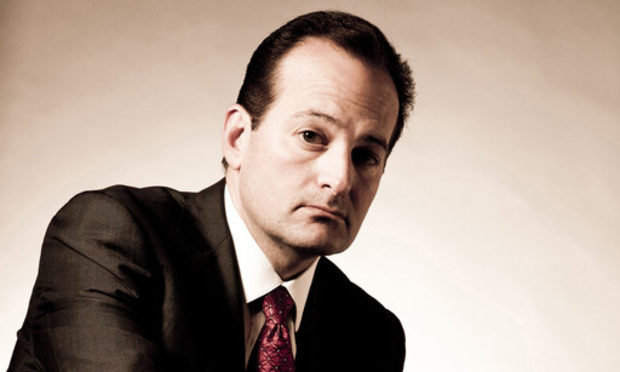
 Brian L. Tannebaum, of Bast Amron in Miami.
A new ruling from the Florida Supreme Court involving law firm Kubicki Draper could change the landscape for lawyers and insurance companies after the high court answered a question hinged on whether third parties had standing to bring legal malpractice suits.
The opinion stemmed from a case that pitted a law firm against an insurer, Arch Insurance Co., who was paying for the firm to defend a policyholder. It ended favorably for the insurance company, which the court allowed to bring a malpractice suit, even though it was not a party in the underlying litigation.
 Andrew S. Berman.
Photo by J. Albert Diaz
"It's a significant decision because until today insurance companies couldn't sue lawyers they hired and paid, who botched defenses, even though the insurer was on the hook for the settlement or judgment," said Miami-based legal ethics expert Andrew Berman of Young Berman Karpf & Karpf, who is not involved in the case. "Now they can."
Contractual subrogation
The outcome turned on a question of great public importance, which Florida's Fourth District Court of Appeal certified to the state's high court.
But Supreme Court justices tweaked the question to highlight the insurer's "contractual subrogation provision." And in the end, they overturned two lower courts and ruled that the third party did have legal standing to sue attorneys representing its policyholder.
"What the Supreme Court focused on was how the insurance company had a duty to defend their insured. That is where the ability to sue for malpractice came from," said legal ethics expert Brian Tannebaum of Bast Amron in Miami, who is not involved in the case. "My concern is you may have other corporate entities who might say, 'Lets see what the Supreme Court would have to say, since we are not an insurance company, but we are paying a fee because we have a duty to defend this person.' So I worry about the slippery slope. Where does this end? I can see other entities coming forward at some point seeing if this situation would apply to them."
The original question from the appellate court asked justices "whether an insurer has standing to maintain a malpractice action against counsel hired to represent the insured, where the insurer has a duty to defend."
But the high court rephrased the certified question to add a phrase that showed the relationship between the insurer and litigant, whose legal expenses the company covered.
The issue then became "whether an insurer has standing though its contractual subrogation provision to maintain a malpractice action against counsel hired to represent the insured, where the insurer has a duty to defend."
"We answer the rephrased certified question in the affirmative," Florida Supreme Court justices wrote, overturning the Fourth District Court decision that had previously favored Kubicki Draper.
Read the ruling
The case dates back to 2008, when Arch Insurance Co. brought a malpractice lawsuit against Kubicki Draper over the law firm's defense of the insurer's client Spear Safer CPAs and Advisors.
Arch's policyholder—and Kubicki Draper's client—had reached a $3.5 million settlement after a lawsuit from Mutual Benefits Corp.
The insurance company argued the statute of limitations had already expired, and so Mutual Benefits Corp. had missed the deadline to sue Spear Safer CPAs and Advisors. It sued the law firm, claiming Kubicki Draper had committed legal malpractice by failing to raise that argument before reaching the multimillion-dollar setting, which Arch would have to cover.
But the law firm argued that it had no legal duty to Arch, because its client was Spear Safer—and not the insurer.
Arch rebutted that it was an intended third-party beneficiary, and the insurance policy provided it subrogation rights to pursue losses from the Spear Safer litigation.
At trial, the court had sided with the law firm, granting Kubicki's motion for summary judgment. It had found no relationship between the law firm and the insurer, and had concluded that Kubicki owed Arch no legal duty.
The Fourth District Court of Appeal had also sided with the law firm, but the Florida Supreme Court overturned that decision and remanded the case for further proceedings.
Chief Justice Charles T. Canady and Justices Jorge Labarga, Alan Lawson, Carlos G. Muñiz, John D. Courriel and Jamie R. Grosshans unanimously agreed with Justice Ricky Polston, who wrote for the high court.
Representing Arch are Benjamin J. Board and Brittany P. Borck of Winget Spadafora & Schwartzberg in Miami, and Edward G. Guedes and Eric S. Kay of Weiss Serota Helfman Cole & Bierman in Coral Gables.
Kubicki Draper's attorneys are Christopher V. Carlyle and John N. Bogdanoff of The Carlyle Appellate Law Firm in Orlando, and Stevan K. Hunter and Christopher J. Lynch of Hunter & Lynch in Coral Gables.
Counsel did not immediately respond to requests for comment.
Katherine E. Giddings and Melanie Kalmanson of Akerman in Tallahassee are representing the American Property Casualty Insurance Association, which filed an amicus brief.
Jasmine Floyd

Jasmine Floyd is a South Florida litigation reporter with the Daily Business Review at ALM. You can reach her at [email protected] or 678-472-8947.