

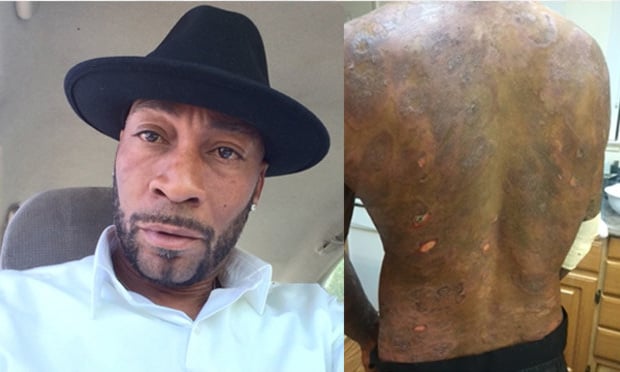
 Plaintiff DeWayne "Lee" Johnson alleges that exposure to certain Monsanto glyphosate-based herbicides, including Roundup, caused him to develop non-Hodgkin lymphoma.
Lawyers involved in the first Roundup verdict in the nation have petitioned the California Supreme Court to review the jury's award.
In a Monday petition, Bayer, which owns Monsanto, insisted that the U.S. Environmental Protection Agency and Federal Insecticide, Fungicide, and Rodenticide Act preempted the claims of plaintiff Dewayne "Lee" Johnson, who got a $289 million verdict in 2018. Bayer's lawyers wrote that the appeal is about more than Johnson's case.
"These stark conflicts with the longstanding position of the federal government, settled legal principles, and the decisions of this and other courts would be reason enough to grant review, even if this case stood alone," wrote Bayer's attorneys at Horvitz & Levy and Bryan Cave Leighton Paisner. "But it does not. This case is the first of tens of thousands of pending cases alleging injury from Roundup exposure based on the same misconceived theories of liability."
Johnson's lawyers filed their own petition Aug. 28, arguing that the First District Court of Appeal, in lowering the award to $20.5 million July 20, should not have reduced their client's compensatory damages. In particular, they wrote, the jury based much of the compensatory damages on "loss of enjoyment of life" due to a shortened life expectancy. Whether Johnson could receive such damages for a shortened life, while still alive at trial, is a question of first impression for California courts, they wrote.
"There is a gap in California law regarding how to compensate a victim for the life he or she is deprived of because of wrongdoing," wrote one of Johnson's lawyers, R. Brent Wisner, of Baum, Hedlund, Aristei & Goldman, in an emailed statement. "The appellate court got it wrong in concluding that lost life expectancy is not compensable. Lee Johnson will not live as long as he should because of Monsanto. Our legal system should not reward companies like Monsanto for killing, as opposed to just injuring, a plaintiff."
The petitions, which are the first before the California Supreme Court from among three Roundup cases that have gone to trial, come after Bayer announced settlements of 75% of the 125,000 claims alleging its pesticide caused non-Hodgkin lymphoma. Those settlements, which Bayer estimated could cost as much as $10.9 billion, excluded tens of thousands of cases, including Johnson's lawsuit and two others that ended in verdicts of $80 million and $2 billion last year. Monsanto has appealed both verdicts to the U.S. Court of Appeals for the Ninth Circuit and a California appeals court.
The settlements, however, have hit several roadblocks. On July 6, U.S. District Judge Vince Chhabria of the Northern District of Virginia, who is overseeing the multidistrict litigation over Roundup, indicated he was unlikely to approve a proposed $1.1 billion class action settlement that would have capped future claims, prompting lawyers to withdraw a motion to approve that deal. Then, at an Aug. 27 hearing, lawyers told Chhabria that many of the Roundup settlements had unraveled. Chhabria gave lawyers until Sept. 24 to resolve their disputes, after which he could lift the stay on litigation and move forward with more Roundup trials.
In a footnote to its Monday petition, Bayer called the finalization and approval of those settlements "uncertain."
Its petition focused primarily on federal preemption, which made it impossible for Monsanto to add warning labels to Roundup, and the controversial "consumer expectations test" on which the jury based its design defect finding. Bayer also insisted that the appeals court ruling "badly distorts" the standard for failure-to-warn claims.
Johnson's lawyers, in their petition, targeted the compensatory damages in the case, including Bayer's failure to challenge the jury's instruction on that matter until after the trial.
San Francisco Superior Court Judge Suzanne Bolanos reduced the original verdict to $78 million but retained the jury's $39.3 million in compensatory damages, which included $1 million per year for the 33 years that Johnson would have lived.
The appeals court, however, noted that Johnson had a life expectancy of another two years at the time of the trial and was still alive at the time of the June 2 oral arguments. Its opinion landed at $4 million, which, when added with other compensatory damages, totaled $10.2 million.
Johnson's lawyers, in their petition before the state's high court, insisted the California Supreme Court should take up the case to decide a matter of first impression: whether the "loss of enjoyment of life," which made up a large share of Johnson's original compensatory damages award, is compensable.
The appeals court also upheld punitive damages, there was "substantial evidence was presented from which the jury could infer that Monsanto acted with a conscious disregard for public safety by discounting legitimate questions surrounding glyphosate's genotoxic effect and failing to conduct adequate studies."
Originally, the jury awarded $250 million in punitive damages, which the appeals court lowered to match compensatory damages.
In the high court petitions, Johnson's lawyers criticized the "lockstep reduction" of punitive damages. Bayer, on the other hand, insisted the decision on punitive damages "creates an irreconcilable conflict" with another appeals court opinion that tossed a $417 million verdict against Johnson & Johnson over its talcum powder, based in part on the scientific evidence at trial.
Amanda Bronstad

Amanda Bronstad is the ALM staff reporter covering class actions and mass torts nationwide. She writes the email dispatch Law.com Class Actions: Critical Mass. She is based in Los Angeles.